
Health Anxiety: Breaking the Cycle of Illness Worry with DBT
Health anxiety, also known as Illness Anxiety Disorder, occurs when the fear of having a serious medical condition becomes so overwhelming that it interferes with your daily life. Even after doctors provide reassurance, the mind remains stuck in a loop of checking, scanning, and catastrophizing.
At Southside DBT, we help you transition from the constant fear of what if to a state of Wise Mind, where you can acknowledge physical sensations without being controlled by them.
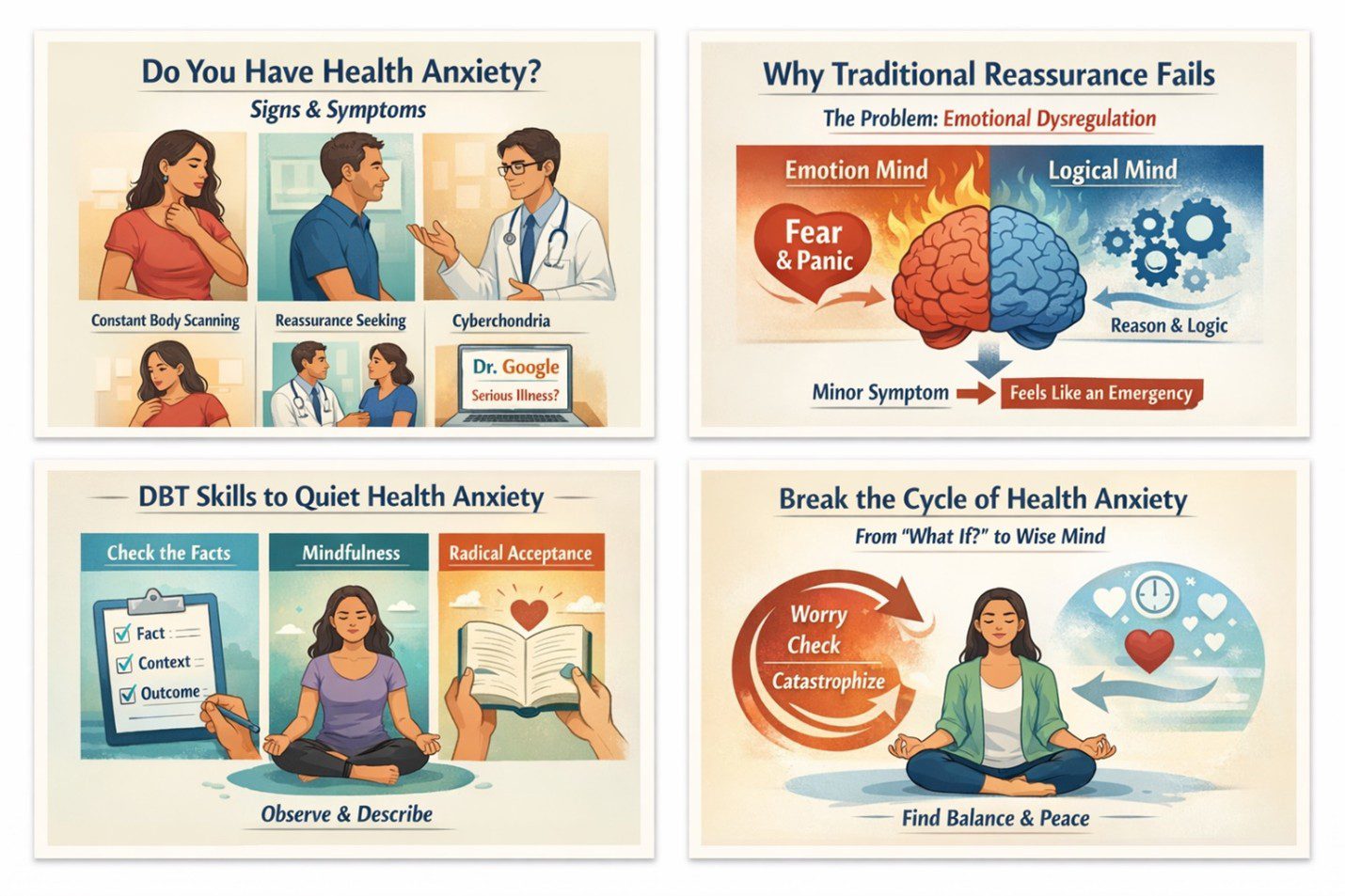
Do You Have Health Anxiety? (Signs and Symptoms)
You may be struggling with health anxiety if you experience any of the following:
1. Constant Body Scanning:
Frequently checking your body for lumps, pains, or unusual sensations, even when there is no reason to believe you are unwell.
2. Reassurance Seeking:
You visit doctors frequently or ask loved ones to confirm that you are okay, yet you still feel anxious despite being reassured.
3. Cyberchondria:
Obsessively searching for symptoms online and convincing yourself you have the worst-case diagnosis, even though medical tests come back clear.
4. Misinterpreting Normal Functions:
You might mistake a normal stomach growl or slight increase in heart rate for a sign of a serious or terminal illness.
Why Traditional Reassurance Fails
As Mayo Clinic points out, medical reassurance often only offers temporary relief for those with illness anxiety. This is because the problem isn’t a lack of information; it is Emotional Dysregulation. When your brain’s “Emotion Mind” takes over, even the smallest physical sensation feels like an emergency.
The DBT Approach: Skills to Quiet the Fear
Unlike standard techniques that suggest distraction from anxiety, DBT provides specific clinical tools to change how your brain processes health fears. These techniques are designed to break the cycle of worry, so you can feel more in control and less overwhelmed by health-related thoughts.
1. Check the Facts (Emotion Regulation)
When you feel a sensation (e.g., dizziness) and think, I must be having a stroke, stop and look at the facts.
- The Fact: I am feeling dizzy.
- The Context: I haven’t eaten in 6 hours, and I’m stressed.
- The Outcome: The dizziness is more likely due to hunger and stress than a serious medical condition.
Why It Works:
By examining the context and facts, you challenge catastrophic thinking, preventing anxiety from spiraling into fear.
2. Mindfulness of Body Sensations
Instead of running away from a sensation (NHS’s distraction method), DBT teaches you to Observe and Describe it. By noticing the sensation without judgment, you take away its power to cause panic.
How to Practice:
- When you experience a physical sensation, focus on it without immediately labeling it as “dangerous.”
- Describe it in neutral terms: I feel a slight tingling in my fingers, instead of, This is definitely a sign of a heart attack.
Why It Works:
Mindfulness helps you stay present and reduce anxiety, rather than being hijacked by your thoughts and catastrophic worries.
3. Radical Acceptance of Uncertainty
A major cause of health anxiety is the inability to tolerate uncertainty. Radical Acceptance teaches you to acknowledge that we cannot control everything about our health, but we can control how we respond to the present moment.
How to Practice:
- Accept uncertainty by recognizing that health problems don’t always have clear answers, and that’s okay.
- Embrace the idea that uncertainty is part of life, and you have the tools to cope with it.
Why It Works:
Radical Acceptance helps you let go of the need for control and trust that your body is capable of handling the challenges that come with it.
Start Living Again
Health anxiety can steal your time, energy, and peace of mind. By using DBT skills, you can stop doctor shopping and start building a life worth living one where you are not controlled by constant health worry.
At Southside DBT, we provide the support you need to ground yourself in reality and find peace in your own body. DBT skills can help you regain control of your emotional life and stop the cycle of intrusive health fears.