
What Are the 17 Symptoms of Complex PTSD?
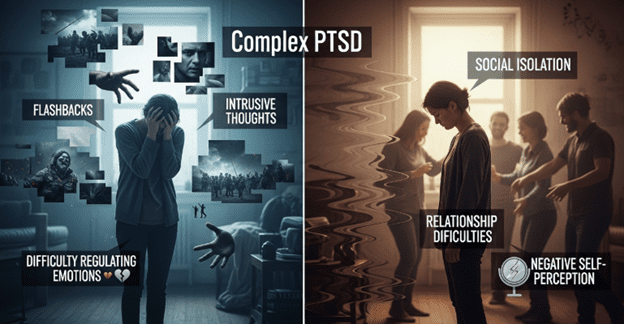
Complex PTSD (CPTSD) is a condition that often arises from prolonged and repeated trauma, such as chronic abuse, neglect, or captivity. Unlike standard PTSD, which typically develops after a single traumatic event, CPTSD involves deeper emotional issues, relationship difficulties, and persistent feelings of shame and guilt. In this guide, we’ll answer the important question: What are the 17 symptoms of complex PTSD? Understanding these symptoms is essential to recognizing and addressing the condition effectively.
The 17 Symptoms of Complex PTSD – Short Answer
A Complex PTSD diagnosis is linked to a variety of symptoms caused by ongoing trauma exposure. The 17 symptoms of complex PTSD can include emotional flashbacks, hypervigilance, dissociation, self-blame, chronic shame, and difficulties in relationships. These symptoms can disrupt emotional, physical, and social functioning, making daily life a challenge for those affected. Recognizing these symptoms is crucial in taking steps towards recovery and healing.
What Is Complex PTSD?
Definition:
Complex PTSD (CPTSD) is a psychological condition that arises from prolonged or repeated exposure to trauma. This trauma can stem from childhood abuse, domestic violence, or prolonged captivity. It is marked by severe emotional disturbances, difficulty with relationships, and altered self-perception.
Key Distinction:
Unlike traditional PTSD, which typically follows a single traumatic event, CPTSD involves the accumulation of prolonged trauma that deeply impacts one’s emotional and relational functioning. People with CPTSD often struggle with emotional dysregulation, self-blame, and persistent negative feelings about themselves.
Causative Factors:
CPTSD usually develops after:
- Childhood neglect
- Chronic domestic violence
- Captivity or repeated traumatic events
What Are the 17 Symptoms of Complex PTSD?
Core Symptoms of Complex PTSD Explained
The 17 symptoms of complex PTSD span emotional, cognitive, and behavioral issues. Here’s a breakdown of each and how treatment approaches like those used at South Side DBT focus on building emotional regulation, distress tolerance, and healthier coping patterns to address these symptoms effectively.
- Emotional Flashbacks
Sudden re-experiencing of past traumatic events triggered by everyday occurrences, making the individual feel as though they are reliving the trauma. - Hypervigilance and Heightened Startle Response
A constant state of being “on edge” where even small noises or changes in the environment can cause significant anxiety. - Self-Blame and Shame
A pervasive feeling that the individual is responsible for their trauma or inherently bad. - Avoidance and Numbing
Avoiding reminders of the trauma and a general emotional numbness, leading to difficulty processing feelings. - Chronic Anxiety
A constant state of worry or fear, often disproportionate to actual events. - Intrusive Thoughts and Memories
Recurrent, involuntary memories or thoughts about the traumatic events. - Low Self-Esteem and Sense of Worthlessness
A diminished sense of self, feeling undeserving of love, care, or success. - Difficulty in Trusting Others
Due to betrayal or abandonment in the past, trusting others becomes almost impossible. - Severe Mood Swings
Rapid changes in mood, from emotional highs to deep lows, often without clear triggers. - Dissociation and Emotional Numbing
The feeling of being detached from oneself, as though the body or mind isn’t fully connected to reality. - Difficulty with Relationships
Problems in maintaining relationships due to trust issues, fear of abandonment, or emotional outbursts. - Feeling “Stuck” or Unable to Move Forward
A feeling of being trapped in the past, unable to make progress or move on with life. - Helplessness or Hopelessness
A pervasive sense that things will never improve, leading to depression or despair. - Feelings of Detachment
A sense of being disconnected from one’s body, surroundings, or even one’s identity. - Perfectionism
An overcompensatory need to appear perfect, often as a way of avoiding judgment or rejection. - People-Pleasing Behaviors
Excessively trying to make others happy, often at the expense of one’s own needs and feelings. - Constant Self-Sabotage
A tendency to undermine one’s own success due to a belief that one doesn’t deserve good things.
How Complex PTSD Symptoms Are Manifested Differently Across Individuals
Complex PTSD in High-Functioning Adults
For many high-functioning adults, Complex PTSD can remain hidden behind a facade of productivity. These individuals often use perfectionism, workaholism, and overachievement as coping mechanisms. They may seem outwardly successful in their careers or social lives but are struggling internally with CPTSD symptoms.
Invisible Signs:
- Emotional numbing may appear as indifference or being overly “chill.”
- Workaholism or perfectionism masks underlying anxiety or fear of failure.
- These behaviors help them survive but prevent true healing.
Gender Differences in the Presentation of Complex PTSD Symptoms
Women:
Women often face emotional dysregulation, finding it difficult to manage intense feelings. Trust issues and difficulties in forming secure relationships are also common, along with symptoms like people-pleasing and chronic self-blame.
Men:
In contrast, men might present anger issues, irritability, and impulsivity. They might be less likely to seek help due to cultural expectations, leading to increased dissociation or avoidance behaviors.
The Role of the Nervous System in Complex PTSD Symptoms
Trauma affects the autonomic nervous system, which controls automatic body functions. The four responses fight, flight, freeze, and fawn—play a significant role in Complex PTSD. Understanding how these responses manifest can help explain various CPTSD symptoms.
Fight Mode Symptoms
- Anger and irritability
- Hypervigilance (constant alertness)
- Impulsivity and sudden outbursts
Flight Mode Symptoms
- Restlessness
- Avoidance (distancing from feelings or situations)
- Perfectionism (attempting to control one’s environment)
Freeze Mode Symptoms
- Dissociation
- Inability to Take Action due to fear or confusion
- Emotional Numbness or detachment
Fawn Mode Symptoms
- People-Pleasing and prioritizing others’ needs
- Lack of Boundaries
- Fear of Rejection
How Complex PTSD Affects Relationships and Social Functioning
CPTSD severely impacts how individuals interact with others. The symptoms often make it difficult to form and maintain healthy relationships.
- Difficulty Trusting Others: People with CPTSD often fear betrayal, making them overly cautious or defensive in relationships.
- Emotional Dysregulation: Mood swings or emotional outbursts may occur without warning, creating tension in both personal and professional relationships.
- Attachment Styles: Individuals with CPTSD may struggle with either anxious or avoidant attachment, leading to unstable relationships.
Guide to Recognize and Address the Symptoms of Complex PTSD
Step 1 – Identifying the Symptoms
The first step is identifying what are the 17 symptoms of complex PTSD and how they show up in your life. This might involve tracking your emotional responses, behaviors, and reactions to specific triggers.
Step 2 – Understanding How Symptoms Manifest in Your Life
Through self-reflection exercises and journaling, you can begin to understand how these symptoms impact your daily life.
Step 3 – Working Through Emotional Flashbacks and Self-Blame
Techniques like cognitive reframing, EMDR, and DBT (Dialectical Behavior Therapy) are powerful tools for managing emotional flashbacks and overcoming self-blame.
Step 4 – Establishing Healthy Coping Mechanisms and Support Systems
Building emotional resilience and seeking professional therapy can help manage CPTSD symptoms effectively.
Complex PTSD vs. Regular PTSD vs. Other Trauma-Related Disorders
| Symptom | Complex PTSD | Regular PTSD | Borderline Personality Disorder (BPD) |
| Emotional Flashbacks | Common | Less Common | Possible but less frequent |
| Dissociation | Frequent & Intense | Occasional | Frequent |
| Self-Blame | Persistent | Occasional | More intense but tied to self-image |
| Chronic Anxiety | High | Moderate | High |
| Relationship Issues | Severe, Difficulty with trust | Moderate | Extreme emotional dysregulation |
| Intrusive Thoughts | High | Moderate | High |
Frequently Asked Questions (FAQs) on the 17 Symptoms of Complex PTSD
What are the primary symptoms of Complex PTSD?
An overview of the 17 symptoms of complex PTSD, which include emotional flashbacks, hypervigilance, chronic shame, and others.
How can Complex PTSD affect everyday life?
The symptoms of CPTSD can affect relationships, work, and mental stability, often leading to difficulties in managing daily responsibilities.
Can Complex PTSD be treated without therapy?
While self-help strategies can offer some relief, therapy is essential for proper healing, as it helps address the deep-rooted trauma.
Is Complex PTSD permanent?
While CPTSD is a long-term condition, recovery is possible with the right therapy and support.
How do I know if I have Complex PTSD?
Look for the key symptoms, such as emotional flashbacks, dissociation, and chronic self-blame. Seek professional help if symptoms persist.
Can Complex PTSD be misdiagnosed as ADHD or anxiety?
Yes, because many of the symptoms overlap, CPTSD can sometimes be misdiagnosed as other disorders, such as ADHD or anxiety.
Conclusion: How to Start Healing from Complex PTSD Today
3-Step Recap:
- Identify symptoms – Recognize what are the 17 symptoms of complex PTSD and how they manifest.
- Seek professional help – Therapy and support are essential for overcoming CPTSD.
- Practice coping strategies – Build emotional resilience and self-care routines.
Healing from Complex PTSD is possible with patience, the right support, and consistent work on emotional regulation and self-compassion.