
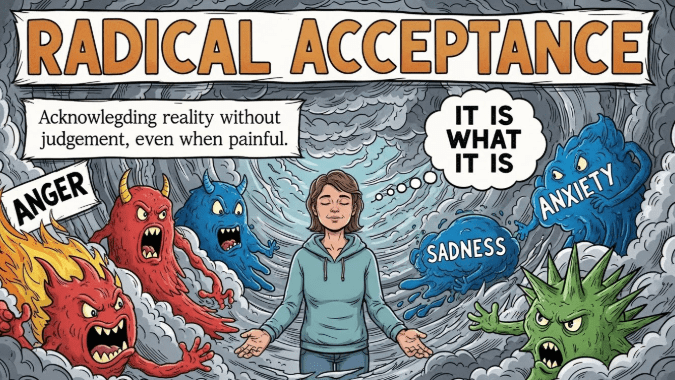
What is Radical Acceptance in DBT?
Radical acceptance is a transformative skill from Dialectical Behavior Therapy (DBT) that can profoundly change the way we respond to life’s challenges. For many, struggles with intense emotions, trauma, or chronic stress can feel overwhelming. Radical acceptance offers a way to face reality without unnecessary suffering. But what does it truly mean, and how can you apply it in daily life? In this guide, we’ll explore everything you need to know about radical acceptance in DBT, its benefits, practical techniques, and real-life applications.
Short Answer: Understanding Radical Acceptance
Radical acceptance is a core DBT skill that involves fully accepting reality as it is, without judgment or resistance. It does not mean approval or resignation; instead, it is about acknowledging situations that are beyond your control to reduce emotional suffering.
Example: If a relationship ends unexpectedly, radical acceptance helps you recognize the reality without constantly fighting or denying it, allowing you to process emotions more effectively.
By incorporating radical acceptance into your life, you can reduce emotional pain, increase clarity, and respond to challenges with greater resilience.
Core Explanation of Radical Acceptance in DBT
Origins and Purpose
Dialectical Behavior Therapy (DBT), developed by psychologist Marsha M. Linehan, combines cognitive-behavioral techniques with mindfulness principles. DBT was initially designed to help individuals with borderline personality disorder (BPD) regulate emotions, tolerate distress, and improve relationships.
Radical acceptance emerged as a central DBT skill to address situations that are uncontrollable or unavoidable. By accepting reality rather than fighting it, individuals can reduce the emotional suffering that arises from resistance. This principle is closely linked to emotional regulation and mindfulness, allowing a person to observe reality without judgment and respond more effectively.
Key Principles of Radical Acceptance
- Accepting Reality vs. Approving It
Accepting reality doesn’t mean you approve or like the situation. It simply means acknowledging it as it is. For instance, you may accept that a job layoff occurred without liking or endorsing it. - Letting Go of Resistance
Emotional suffering often comes from fighting reality. Radical acceptance encourages letting go of the mental struggle, reducing unnecessary stress. - Living in the Present Moment
By embracing the present, you stop ruminating on the past or worrying about the future. This awareness improves clarity and emotional stability.
Psychological and Emotional Benefits
Radical acceptance provides profound mental health benefits, including:
- Reduced emotional suffering: Accepting reality decreases the intensity of negative emotions.
- Decreased anxiety and depression: Acceptance diminishes futile mental resistance that fuels stress.
- Improved coping with trauma and chronic stress: By facing reality without denial, individuals develop resilience and better problem-solving strategies.
Why Radical Acceptance is Important
Radical acceptance is crucial for both emotional and mental health. When reality is resisted, suffering intensifies. Accepting situations, especially those beyond your control, allows you to conserve mental energy for meaningful action.
Examples of importance:
- In mental health therapy, radical acceptance supports distress tolerance.
- In everyday life, it allows you to navigate conflict, loss, or illness without amplifying emotional pain.
- It creates a foundation for mindfulness, reducing impulsive reactions and improving overall well-being.
How Radical Acceptance Works
Guide to Practicing Radical Acceptance
Here’s a practical framework for implementing radical acceptance in daily life:
- Notice the reality you are resisting
Identify situations causing emotional struggle. Awareness is the first step. - Observe your emotional reaction without judgment
Label your feelings (“I feel anger, sadness, or frustration”) without trying to suppress them. - Remind yourself that reality is what it is
Acknowledge that some aspects are beyond your control, e.g., “This situation exists, and I cannot change the past.” - Release the struggle to change the uncontrollable
Let go of futile attempts to rewrite reality, which only intensifies suffering. - Fully embrace the moment
Accept your present circumstances mentally and emotionally. - Integrate acceptance into daily life
Practice mindfulness exercises, journaling, or meditative breathing to strengthen this skill.
Mini Mindfulness Exercise:
Close your eyes, take deep breaths, and silently repeat: “I accept reality as it is. I release resistance. I focus on what I can control.”
Tip for Beginners: Start small by accepting minor inconveniences, like traffic delays or last-minute changes, to build the skill gradually.
Radical Acceptance vs. Other DBT Skills
To better understand radical acceptance, let’s compare it with two other foundational DBT skills: mindfulness and distress tolerance.
| Skill | Definition | Primary Goal | Practical Use | Emotional Impact |
|---|---|---|---|---|
| Radical Acceptance | Fully accepting reality as it is | Reduce suffering | Coping with unchangeable situations | Peace, decreased resistance |
| Mindfulness | Observing the present moment non-judgmentally | Awareness & clarity | Stress reduction, focus | Calm, clarity |
| Distress Tolerance | Managing emotional crises without making them worse | Survive crises | Urgent emotional control | Stability, reduced impulsivity |
Takeaway: While mindfulness builds awareness and distress tolerance manages acute stress, radical acceptance targets the mental struggle against reality itself.
Common Questions About Radical Acceptance
FAQs
- Can radical acceptance change my situation?
No, radical acceptance does not change the situation but changes how you relate to it, reducing suffering. - How is radical acceptance different from giving up?
It is about acknowledging reality, not surrendering your goals. You accept the present while planning constructive action. - Is radical acceptance suitable for trauma survivors?
Yes, it helps process trauma safely without avoidance, reducing ongoing emotional pain. - How long does it take to master radical acceptance?
Mastery varies by individual. Daily practice and mindful reflection can accelerate progress. - Can radical acceptance be applied in relationships?
Absolutely. Accepting others’ behaviors or outcomes without judgment improves communication and emotional stability. - What are common mistakes when practicing radical acceptance?
Confusing acceptance with approval, expecting instant results, or neglecting action when appropriate. - How does radical acceptance reduce anxiety?
By letting go of resistance and focusing on what can be controlled, anxiety levels decrease naturally. - Can radical acceptance be combined with meditation?
Yes, mindfulness meditation enhances acceptance by fostering awareness of thoughts and emotions.
Real-Life Applications of Radical Acceptance
- Personal Relationships: Accepting conflicts or differences without overreacting improves harmony.
- Coping with Illness or Grief: Reduces emotional struggle against unavoidable pain.
- Workplace Stress: Helps manage deadlines, difficult colleagues, or unexpected changes calmly.
- Overcoming Rejection or Failure: Promotes resilience and emotional recovery without self-blame.
Tips for Integrating Radical Acceptance Daily
- Morning/Evening Routines: Begin and end your day with mindful acknowledgment of reality.
- Journaling Exercises: Write down situations you resist and consciously practice acceptance.
- Mindfulness Reminders: Set small prompts or alarms to pause and accept reality in the moment.
- Use Apps or Workbooks: DBT workbooks or meditation apps can guide structured practice.
Conclusion
Radical acceptance in DBT is a powerful skill for anyone seeking to reduce emotional suffering, manage stress, and live more fully in the present. By accepting reality as it is without judgment you can navigate life’s challenges with clarity, resilience, and inner peace. Consistent practice, mindfulness exercises, and integrating acceptance into daily routines make it achievable for everyone.
For further learning, consider exploring South Side DBT and know more about DBT skills like mindfulness, distress tolerance, and emotional regulation to build a comprehensive mental health toolkit.