
Crisis Survival Skills in DBT
Life is unpredictable, and emotional crises can strike suddenly, leaving us feeling overwhelmed, out of control, or even unsafe. Dialectical Behavior Therapy (DBT), developed by psychologist Marsha Linehan, offers a structured approach to managing these intense moments. One of the most critical components of DBT is crisis survival skills practical techniques designed to help individuals navigate extreme emotional distress safely, without making situations worse. Whether it’s a panic attack, a surge of anger, or self-harming urges, crisis survival skills provide the tools to stabilize, cope, and regain control.
In this guide, we’ll explore everything you need to know about crisis survival skills in DBT: what they are, why they matter, how they work, and how to integrate them into your daily life for immediate and long-term emotional resilience.
Short Answer: What Are Crisis Survival Skills in DBT?
Crisis survival skills in DBT are techniques designed to help individuals tolerate extreme emotional distress without making situations worse. They are intended to provide immediate tools for managing acute emotional reactions, preventing impulsive behaviors, and maintaining personal safety.
Practical example: Imagine experiencing sudden, intense anger during a heated argument. Using crisis survival skills allows you to pause, stabilize your emotions, and respond thoughtfully rather than reacting impulsively or destructively.
The key purpose of these skills is to manage emotional crises safely, giving individuals a structured framework to regain control and reduce suffering, even when emotions feel unbearable.
Core Explanation of Crisis Survival Skills in DBT
Origins and Purpose
DBT was developed to help individuals who struggle with intense emotions, self-harm, and interpersonal instability, particularly those diagnosed with borderline personality disorder (BPD). Crisis survival skills were introduced as a core component of DBT to address emotional crises that feel uncontrollable, providing techniques to tolerate distress safely without making problems worse.
These skills are closely tied to emotional regulation, mindfulness, and distress tolerance, forming a foundation that allows individuals to survive high-intensity emotional moments without long-term damage to themselves or their relationships.
Key Principles of Crisis Survival Skills
- Acting Effectively in High-Stress Situations – Crisis survival skills emphasize responding strategically rather than reacting impulsively.
- Maintaining Safety While Emotions Are Intense – Physical, emotional, and relational safety are prioritized during overwhelming moments.
- Temporary Acceptance and Grounding Techniques – Rather than trying to immediately solve the problem, these skills help individuals accept reality temporarily and focus on immediate emotional stabilization.
Psychological and Emotional Benefits
Crisis survival skills offer multiple benefits:
- Immediate Emotional Stabilization: Prevent emotional spirals from escalating.
- Reduced Impulsive or Harmful Behaviors: Helps avoid self-harm, aggression, or destructive decisions.
- Strengthened Coping During Life Crises: Equips individuals with a toolkit for facing future challenges with resilience.
Why Crisis Survival Skills Are Important
Crisis survival skills are essential for anyone navigating intense emotions. They prevent short-term emotional reactions from creating long-term consequences such as relational damage, self-harm, or regret.
Real-life examples include:
- Handling sudden rejection without self-blame
- Managing job loss or unexpected stress without panic
- Navigating interpersonal conflict without escalating tension
By providing structured coping strategies, crisis survival skills ensure that individuals remain grounded and safe even during life’s most challenging moments.
How Crisis Survival Skills Work
Guide to Using Crisis Survival Skills
- Recognize a Crisis Is Occurring
Awareness is the first step. Notice physical sensations, racing thoughts, or emotional spikes signaling a crisis. - Apply the STOP Skill
- S: Stop – Pause whatever you are doing
- T: Take a Step Back – Create space from the trigger
- O: Observe – Notice thoughts, emotions, and urges without judgment
- P: Proceed Mindfully – Choose a safe and effective action
- Use TIP Skills
- Temperature change: Splash cold water or hold an ice cube
- Intense exercise: Engage in short bursts of movement to release tension
- Paced breathing: Slow, deliberate breaths to regulate the nervous system
- Progressive muscle relaxation: Relax muscles progressively to reduce physical stress
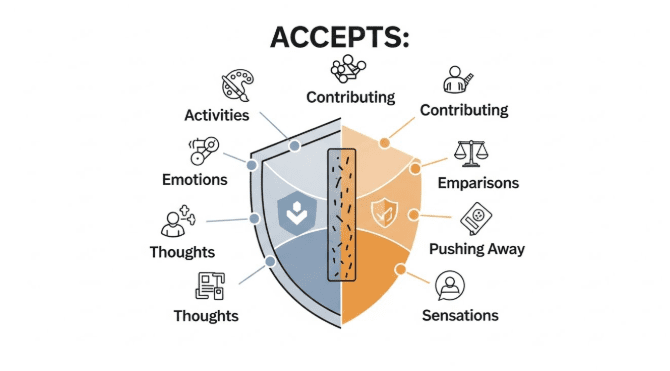
- Distract Using ACCEPTS Strategies
- Activities: Engage in something purposeful
- Contributing: Help someone else
- Comparisons: Remind yourself of past successes
- Emotions: Induce alternative emotions
- Pushing Away: Temporarily set the problem aside
- Thoughts: Shift focus to neutral or positive thoughts
- Sensations: Engage your senses (touch, smell, sound)
- Self-Soothe and Ground
Use sensory techniques like listening to calming music, aromatherapy, or tactile grounding to stay present. - Reflect After the Crisis
Review what triggered the crisis, which skills worked, and plan improvements for future situations.
Mini Grounding Exercise: Sit quietly, focus on your breath, and identify five things you can see, four you can touch, three you can hear, two you can smell, and one you can taste. This immediately shifts focus away from overwhelming emotions.
Tip for Beginners: Start practicing these skills during low-stress situations to make them automatic during real crises.
Crisis Survival Skills vs. Other DBT Skills
| Skill | Definition | Primary Goal | Practical Use | Emotional Impact |
|---|---|---|---|---|
| Crisis Survival Skills | Techniques to tolerate extreme distress safely | Prevent impulsive reactions | During acute emotional crises | Immediate calm, safety, self-control |
| Mindfulness | Observing thoughts and feelings non-judgmentally | Awareness & focus | Stress reduction, self-awareness | Clarity, groundedness |
| Emotional Regulation | Modifying intense emotions effectively | Long-term emotional balance | Coping with recurring triggers | Reduced mood swings, stability |
Takeaway: Crisis survival skills are best for acute moments of distress, while mindfulness and emotional regulation support long-term emotional stability.
Common Questions About Crisis Survival Skills
FAQs
- What are the most effective crisis survival skills in DBT?
STOP, TIP, ACCEPTS, and self-soothing techniques are widely recommended. - Can crisis survival skills prevent self-harm?
Yes, they provide immediate tools to stabilize emotions before acting impulsively. - How quickly do crisis survival skills work during intense emotions?
When practiced regularly, effects can be immediate, helping to reduce panic or agitation within minutes. - Are these skills suitable for trauma survivors?
Absolutely. They offer safe, structured ways to manage overwhelming emotional responses. - Can crisis survival skills be practiced outside therapy?
Yes, with guidance from DBT resources or workbooks, these skills can be used independently. - How are crisis survival skills different from long-term coping strategies?
They focus on immediate distress, whereas long-term strategies address recurring emotional patterns. - How do I know which DBT skill to use in a crisis?
STOP first to gain control, then use TIP or ACCEPTS depending on emotional intensity and context. - Can crisis survival skills help with panic attacks or anger outbursts?
Yes, they provide structured interventions to stabilize physiology and reduce impulsivity.
Real-Life Applications of Crisis Survival Skills
- Handling Sudden Panic Attacks: Calm the body with TIP and grounding techniques.
- Managing Interpersonal Conflicts: Use STOP to pause before reacting emotionally.
- Coping with Grief or Rejection: Apply ACCEPTS to distract and stabilize emotions.
- Preventing Impulsive Actions: Use self-soothing and reflection to avoid harmful behaviors.
Tips for Integrating Crisis Survival Skills Daily
- Keep a “crisis survival kit” with notes, exercises, or grounding tools.
- Practice skills during low-stress moments to build automaticity.
- Pair with mindfulness routines for consistent emotional regulation.
- Use DBT apps or workbooks for structured, guided practice.
Conclusion
Crisis survival skills in DBT are essential tools for anyone facing intense emotions or high-stress situations. By providing structured techniques to tolerate distress safely, these skills help prevent impulsive behaviors, stabilize emotional reactions, and build long-term resilience. Consistent practice with South Side DBT, reflection, and integration into daily life transform these skills from emergency interventions into powerful tools for emotional mastery.
For a complete mental health toolkit, combine crisis survival skills with mindfulness, distress tolerance, and emotional regulation to handle both immediate crises and long-term emotional challenges with confidence.