
How to Use DBT TIPP Skills to Stop an Emotional Crisis Fast
Have you ever felt so overwhelmed that your brain literally stops thinking straight? In Dialectical Behavior Therapy (DBT), this is called being “over-aroused.” When your distress level hits a 9 or 10 out of 10, your logical mind (Reasonable Mind) shuts down, and your survival instincts take over.
In these moments, you don’t need talk therapy you need a biological reset. That is exactly what TIPP skills do. They hack your body’s chemistry to force your nervous system to calm down in minutes.
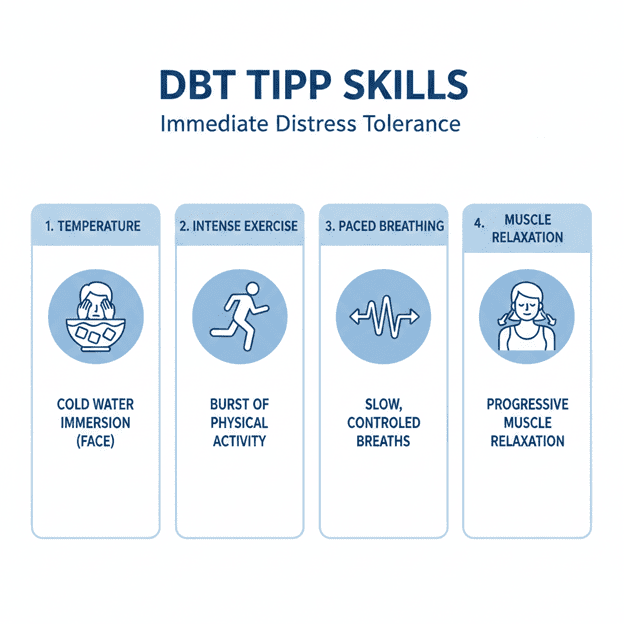
T – Temperature: The Mammalian Dive Reflex (The Ultimate Reset)
While most guides simply suggest “using cold water,” they miss the scientific why that makes this skill so powerful.
The Science Gap: How it Works
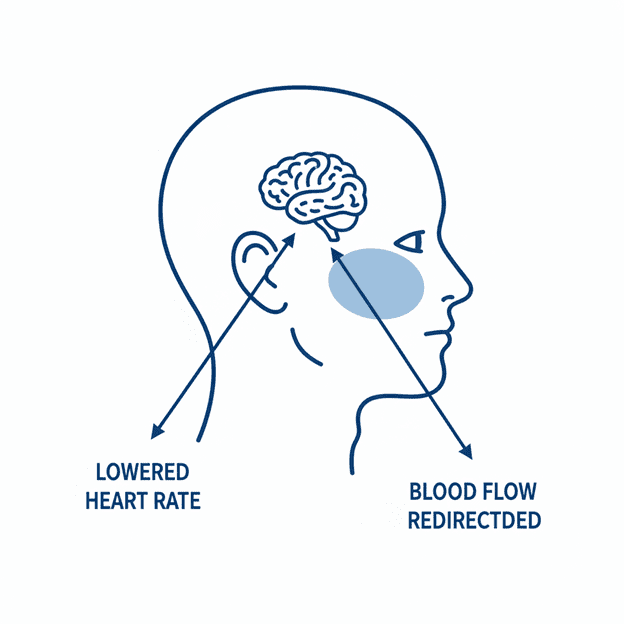
When you splash ice-cold water on your face specifically the area under your eyes and above your cheekbones and hold your breath, you trigger the Mammalian Dive Reflex. This is an ancient biological survival mechanism. Your brain thinks you are diving deep into cold water, so it immediately:
- Drops your heart rate significantly
- Redirects blood flow to your heart and brain
- Shifts your nervous system from Fight or Flight to Rest and Digest
How to Do It Correctly:
- Fill a bowl with very cold water (or use an ice pack wrapped in a thin towel).
- Hold your breath and lean your face into the water for 15 30 seconds.
- Ensure the area around your eyes and nose is submerged.
I – Intense Exercise: Burning Off the Cortisol
When you are in a crisis, your body is flooded with adrenaline and cortisol. If you don’t use that energy, it turns into physical agitation or panic.
The Gap: Why 20 Minutes Matters
The goal here isn’t a long workout; it’s about intensity. Engaging in 20 minutes of fast-paced activity (e.g., sprinting, jumping jacks, or power-walking) burns off the stress hormones stored in your muscles. It tricks your brain into thinking you have escaped the danger, allowing your body to finally relax.
P – Paced Breathing: Hacking the Vagus Nerve
Many PDFs suggest deep breathing, but without the right ratio, it can actually increase anxiety.
The Science Gap: The Exhale Ratio
To truly calm the nervous system, your exhale must be longer than your inhale.
The Technique:
- Breathe in for a count of 4.
- Breathe out for a count of 6 or 8.
Why It Works:
Slow, deep breathing (specifically long exhales) stimulates the Vagus Nerve, which acts as the “brake” for your heart rate. It sends a direct signal to the brain that the emergency is over, calming your system down.
P – Paired Muscle Relaxation: Releasing Physical Stress
We often hold emotional pain in our bodies without realizing it clenched jaws, tight shoulders, or a knotted stomach.
How to Practice:
- Breathe in and tense a specific muscle group (like your fists or shoulders) as hard as you can for 5 seconds.
- Breathe out and suddenly release the tension.
- Notice the difference between the feeling of tension and the feeling of relaxation.
By pairing the release of physical tension with your breath, you teach your brain to let go of the physical grip that anxiety has on your body.
Conclusion: Immediate Relief with TIPP Skills
DBT’s TIPP skills are powerful tools for immediate distress tolerance. Whether you’re dealing with overwhelming anger, anxiety, or sadness, these techniques provide a biological reset that calms your body and mind.
By practicing these techniques regularly, you can train your body to respond effectively to emotional crises. TIPP skills not only help you manage intense emotions in the moment but also pave the way for long term emotional regulation.
Remember: TIPP is for emergency use when you are at the height of distress. Once you’ve calmed your body, you can move into Wise Mind to make thoughtful decisions.
Call to Action:
If you find yourself frequently overwhelmed by emotions, consider integrating these TIPP skills into your daily routine. And for a deeper dive into DBT and emotional regulation, explore our other resources or schedule a consultation with a DBT therapist.