
Managing Workplace Burnout with DBT: A Scientific Guide to Professional Resilience
Work related stress is often dismissed as part of the job, but from a clinical perspective, chronic stress is a direct attack on your nervous system. When deadlines pile up and workplace conflict arises, your body stays in a state of high arousal. Over time, this leads to Professional Burnout which is a state of emotional, physical, and mental exhaustion.
Dialectical Behavior Therapy (DBT) offers a structured way to manage this overwhelm by combining Acceptance and Change. This allows you to navigate high pressure environments without losing your emotional baseline.
The Biology of Burnout: Why Your Brain Freezes
When workplace distress hits a 9 or 10 on the scale, your Prefrontal Cortex which is the part of the brain responsible for logic and planning effectively shuts down. Your Amygdala takes over and triggers a fight, flight, or freeze response. This is why it might feel impossible to answer a simple email or make a decision when you are stressed. DBT skills act as a circuit breaker for this biological response to help you regain control.
Core DBT Skills for the Workplace
1. Mindfulness: The Power of the Pause Mindfulness at work is about noticing your emotional triggers before you react impulsively. Instead of immediately responding to a passive aggressive message, pause for 30 seconds. Observe the physical sensation in your body like a tight chest or hot face without judging it. This awareness creates the space needed to choose a Wise Mind response.
2. Distress Tolerance: Desk Side TIPP Skills When a meeting or deadline pushes you into a crisis state, you need an immediate physical reset.

- Temperature: Use a cold water bottle or ice pack on your eyes and cheeks to trigger the Mammalian Dive Reflex. This slows your heart rate chemically to force your body to calm down.
- Paced Breathing: Use a 4-8 ratio where you inhale for 4 and exhale for 8. This stimulates the Vagus Nerve to signal your brain that the emergency is over.
3. Interpersonal Effectiveness: Setting Professional Boundaries Burnout often happens because we cannot say no or ask for what we need. The DEAR MAN technique helps you advocate for yourself professionally. If your workload is unsustainable, you can Describe the facts, Express your concern about quality, and Assert your need for a prioritized task list without feeling guilty.
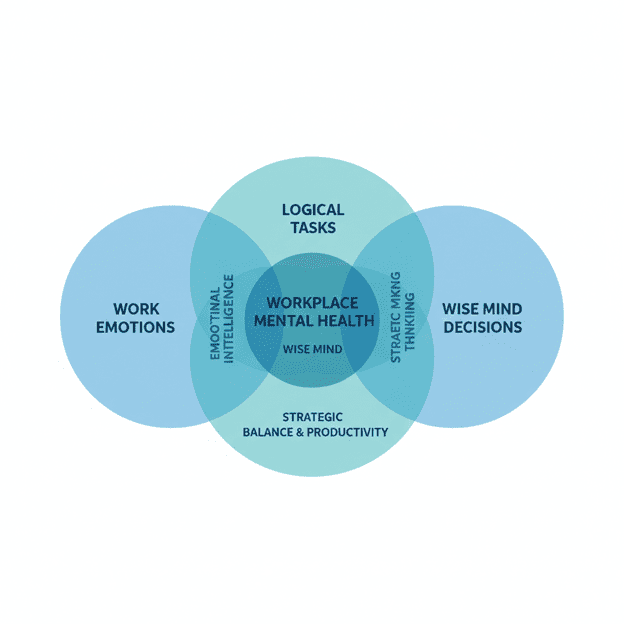
Applying Wise Mind to Career Decisions
A common mistake in burnout is making impulsive career moves while in Emotional Mind. Alternatively, staying in a toxic job just because it makes sense on paper is staying in Reasonable Mind. Wise Mind is the balance that acknowledges your emotional exhaustion while considering the logical steps needed for a healthy career transition.