
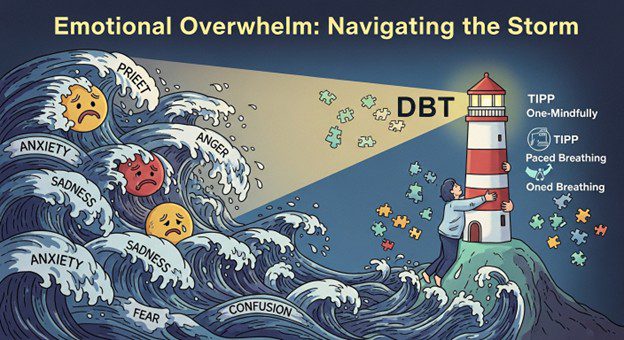
Emotional Overwhelmed: What to Do When Everything Feels Like Too Much
Have you ever felt like your brain has too many tabs open and the entire system is about to crash? That’s emotional overwhelm. It’s that heavy feeling of being completely submerged by your emotions, where even a small task feels like a mountain. At Southside DBT, we don’t just tell you to calm down we teach you how to physically and mentally reset your nervous system when it’s overloaded.
What Does Emotional Overwhelmed Feel Like?
Emotional overwhelm is more than just feeling stressed. It is a physiological state where your nervous system enters Red Alert mode. Common signs include:
- The Racing Mind: Thoughts moving so fast you can’t catch a single one.
- Physical Tension: Chest tightness, shallow breathing, or a heavy feeling in your body.
- Analysis Paralysis: Being so overwhelmed by choices that you end up doing nothing at all.
- Emotional Outbursts: Sudden crying or anger over something minor because your “cup” is already full.
The Content Gap: Why You Can’t “Think” Your Way Out
While many platforms suggest journaling or meditation, these methods often fail when you’re in a 0-to-100 overwhelm state. This is because your logical brain (Prefrontal Cortex) shuts down, and your emotional center (Amygdala) takes over. This state is called Emotional Hijacking. You cannot use “logic” to fix a biological emergency you must address the body first.
How DBT Helps You Survive the Overwhelmed
When you feel like you’re drowning, you don’t need a swimming lesson; you need a life jacket. Here are the DBT “life jackets” for immediate relief:
1. The TIPP Skill (The Emergency Reset)
When your emotional intensity is at its peak, use TIPP to change your body chemistry in under 60 seconds:
- Temperature: Splash ice-cold water on your face or hold an ice cube. This triggers the “Mammalian Dive Reflex,” which physically forces your heart rate to slow down.
- Intense Exercise: Do 60 seconds of high-intensity movement (like jumping jacks) to burn off the excess adrenaline.
2. Paced Breathing
Slow your breath so your exhale is longer than your inhale (e.g., breathe in for 4 counts, out for 6). This signals your brain that the “danger” has passed and it’s safe to calm down.
3. One-Mindfully (One Thing at a Time)
Overwhelm usually comes from looking at the whole mountain. DBT teaches you to focus only on the next 10 inches.
- The Skill: Ask yourself, What is the one thing I need to do right now? Wash one dish. Send one email. Take one breath.
Moving from Overwhelm to Wise Mind
Once the physical intensity drops, you can access your Wise Mind the healthy balance between your logic and your feelings. At Southside DBT, we work with you to identify the triggers of your overwhelm so you can build a “buffer” before the next wave hits.
Example: If you’re overwhelmed at work and you’ve practiced TIPP and One-Mindfully, you can then access your Wise Mind. This state allows you to make a balanced decision like: I will finish this task first, and then I’ll take a 5-minute break to recharge.