
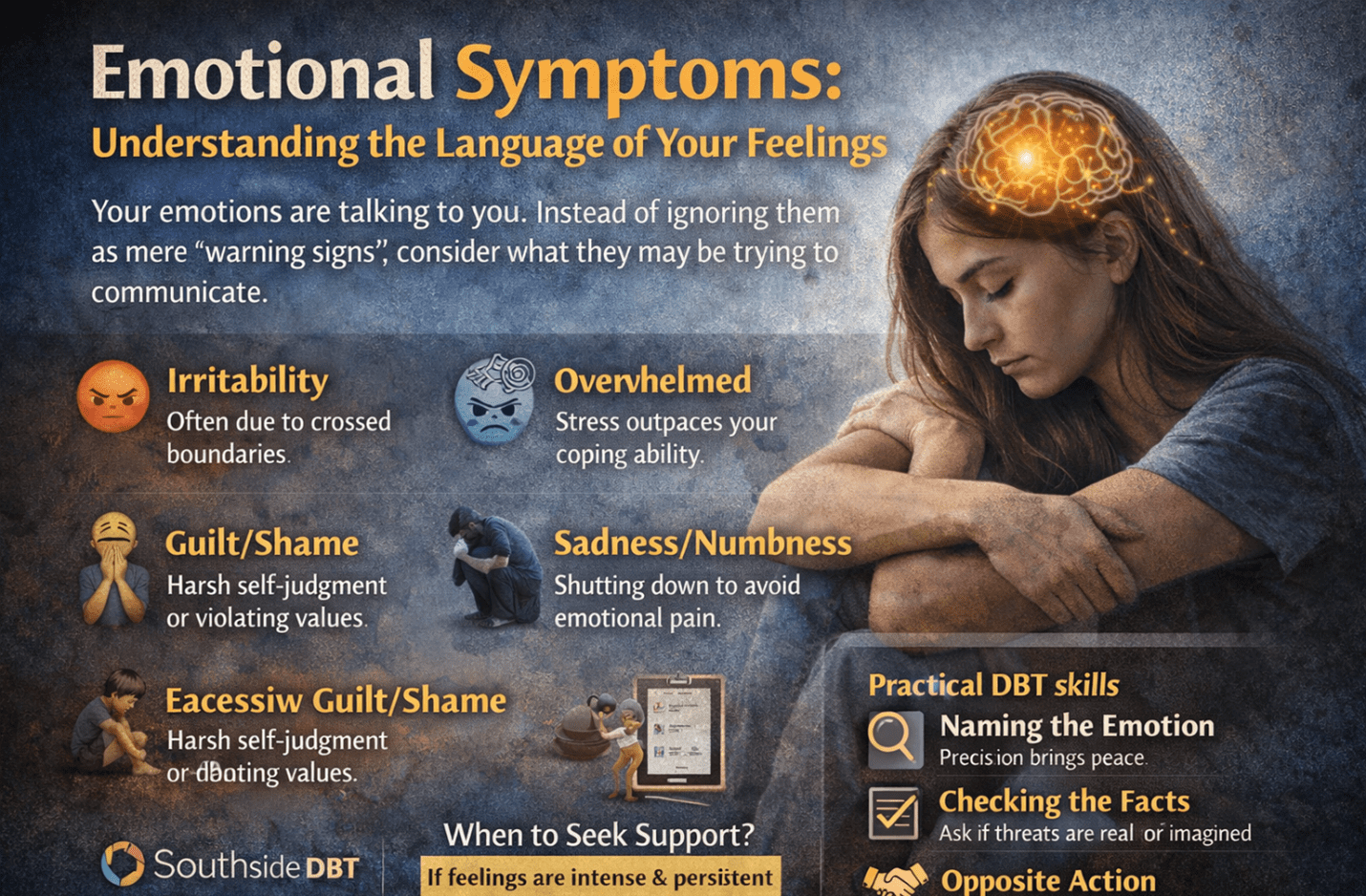
Emotional Symptoms: Understanding the Language of Your Feelings
Your emotions are constantly talking to you. While major health platforms often label emotional symptoms as warning signs of mental illness, at Southside DBT, we see them differently. We view your emotions as valuable information. When you experience emotional symptoms, your brain is simply signaling that an important need is not being met.
Common Emotional Symptoms: What Are They Trying to Tell You?
Emotional symptoms aren’t just signs of being sick; they are your body’s natural response to the world around you.
- Intense Irritability: This often happens when your personal boundaries are being crossed or your goals are being blocked.
- Emotional Overwhelm: This is a signal that your current stress has become greater than your ability to cope with it.
- Excessive Guilt or Shame: This suggests that you might be judging yourself too harshly or feel you’ve gone against your own values.
- Persistent Sadness or Numbness: This can be the brain’s way of “shutting down” to protect you from emotional pain that feels too heavy to carry.
Beyond the Label: Why Knowing the Name Isn’t Enough
Looking at a list of symptoms can be scary. You might start worrying, Do I have a disorder? But simply labeling a symptom doesn’t help you feel better. The real question is: What do I do with this feeling now? This is where Dialectical Behavior Therapy (DBT) makes a difference. We don’t just help you identify symptoms; we give you the tools to regulate them.
How to Decode and Manage Your Symptoms with DBT
You can regain control over your emotional symptoms by using these practical clinical tools:
1. Naming the Emotion (Observe & Describe)
Research shows that simply giving an emotion the correct name can lower its intensity.
- The Skill: Instead of saying, I feel bad, try to be specific. Say, I feel disappointed or I feel neglected. Precision leads to peace.
2. Checking the Facts
While many organizations focus on warning signs, DBT teaches you Reality Testing.
- The Skill: If you feel a surge of insecurity, stop and look at the facts. Ask yourself: Is there an actual threat right now, or is my brain reacting to a memory from the past?
3. Opposite Action
When an emotional symptom tries to push you in a harmful direction, you can choose to move the opposite way to change how you feel.
- The Symptom: Sadness that makes you want to stay in bed and isolate.
- The Opposite Action: Get up, get dressed, and reach out to a friend. Doing the opposite breaks the emotional cycle.
When Should You Seek Professional Support?
If your symptoms feel so intense that you are stuck in Emotion Mind and your daily life like work or relationships is suffering, it may be time for professional help. At Southside DBT, we help you decode these emotional signals without judgment and provide a clear path toward stability.