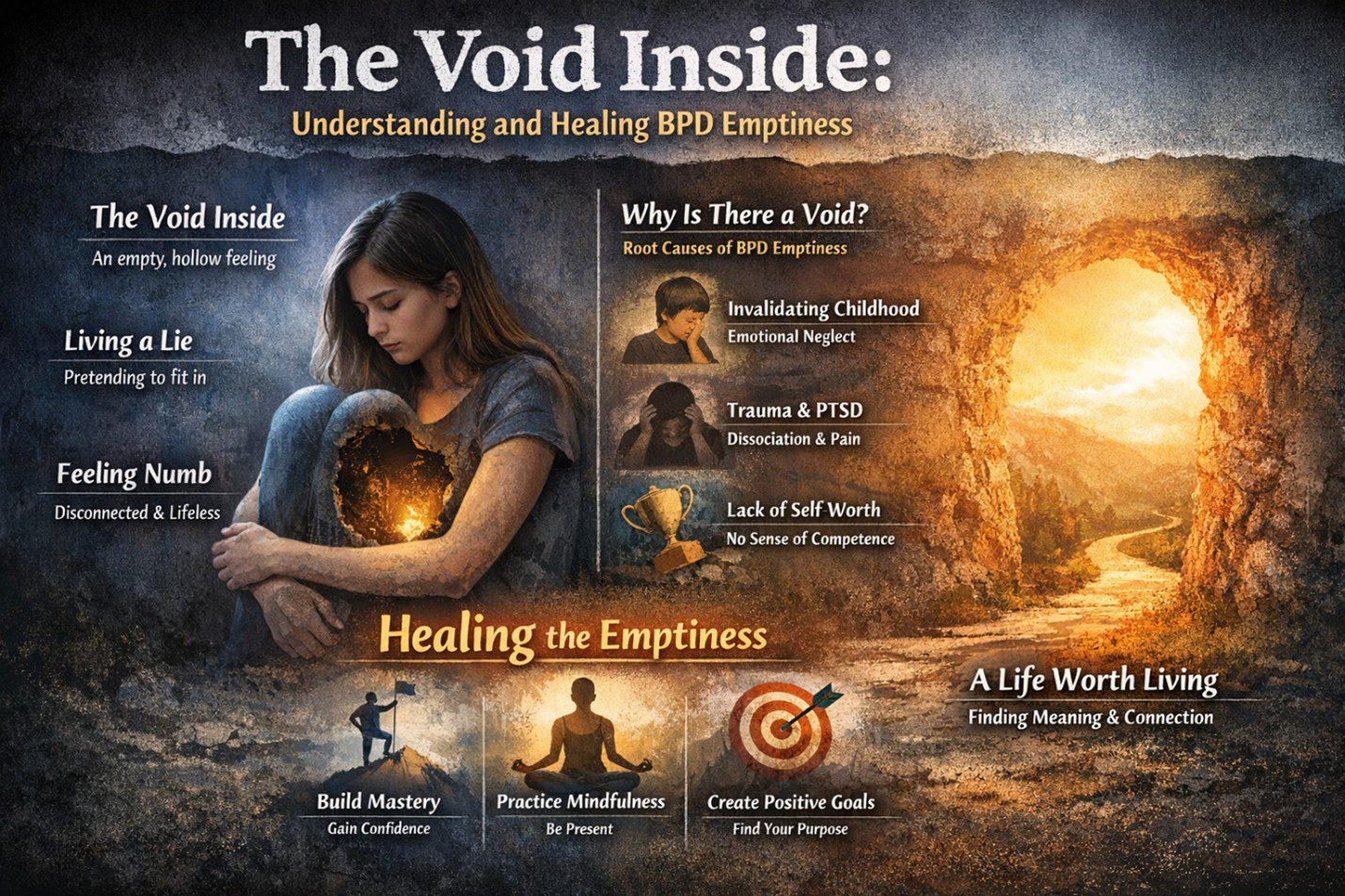
The Void Inside: Understanding and Healing BPD Emptiness
Chronic feelings of emptiness are often described by those with Borderline Personality Disorder (BPD) as an intensely unpleasant feeling of nothingness or a disconnection from both self and others. Unlike depression, which is characterized by sadness, BPD emptiness feels like going through life mechanically purposeless and numb.
What Does Chronic Emptiness Feel Like in BPD?
Many people with BPD struggle to put this feeling into words, which is why it is often overlooked by therapists. Here are common descriptions:
- The Void: A sense of a physical hole or “deadness” inside the chest that makes the person feel incomplete.
- Pretence: Acting a certain way in social situations to fit in while hiding the emptiness underneath.
- Boredom vs. Emptiness: Boredom is situational, but BPD emptiness is an enduring state of not feeling “present” in one’s own life.
Why Is There a Void? (The Causes of BPD Emptiness)
Research suggests that chronic emptiness in BPD is often rooted in early experiences and biological sensitivities:
- Invalidating Environments: Growing up where emotions were dismissed makes it difficult to develop a clear “sense of self,” leading to an internal void.
- Trauma and PTSD: A history of trauma can exacerbate emptiness through dissociation, where the mind numbs itself to survive emotional pain.
- Lack of Childhood Competencies: Successes in school or sports act as building blocks; without them, adults may feel a lack of ownership over their lives.
How DBT Fills the Void: Skills for Healing
At Southside DBT, we help you build competencies and mindfulness to ground you in reality:
- Building Mastery (Emotion Regulation): By doing one small thing every day that makes you feel competent, you begin to fill the void with a sense of ownership.
- Mindfulness (The Art of Participating): This skill teaches you to throw yourself completely into the present moment without self-consciousness, allowing you to experience the depth of life again.
- Accumulating Positive Emotions: Replacing high-risk behaviors with a structured plan to build positive affect through long-term, values-based goals.
A Life Worth Living: Moving Beyond Emptiness
Emptiness is a persistent symptom, but research shows it declines significantly over time with effective treatment. By moving beyond “fixing moods” and focusing on building a stable identity, you can rediscover meaning and connection.