
Mood Swings Without a Diagnosis: Why You Feel Out of Control
Many people experience intense emotional shifts without ever receiving a formal clinical diagnosis. You might feel like you are on an emotional rollercoaster—fine one minute and overwhelmed the next. At Southside DBT, we believe you don’t need a medical label to deserve relief.
What Causes Mood Swings Without a Formal Diagnosis?
Mood swings without an official diagnosis are common and often linked to various biological and environmental factors. While mood disorders like Bipolar Disorder and BPD are clinically significant, undiagnosed mood swings are still meaningful and can affect daily life.
Common Causes of Mood Swings:
Emotional Thermostat Sensitivity: Some people are born with a more sensitive nervous system. Their “emotional thermostat” heats up faster and stays hot longer than others, causing rapid shifts even without a diagnosable condition.
Neurotransmitter Fluctuations: Chemicals like serotonin and dopamine regulate mood. Shifts due to stress, poor sleep, or nutrition can cause sudden drops.
Example: A stressful day at work can shift serotonin levels, triggering irritability or sadness.
Hormonal Waves: Life stages like puberty, pregnancy, and menopause dramatically affect stability.
Example: During menopause, estrogen fluctuations can contribute to heightened emotional responses.
Why “Just Relaxing” Isn’t Enough to Manage Mood Swings
Methods like deep breathing often fail during intense shifts because they don’t account for the physiology of Emotion Mind.
The Emotional Hijacking:
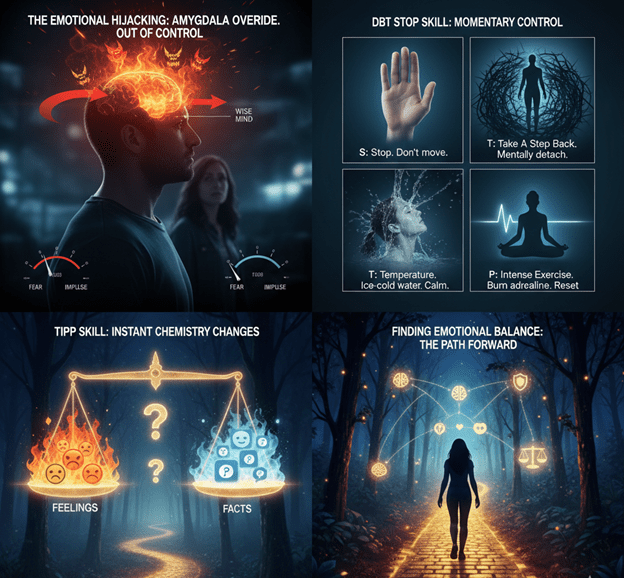
When mood swings occur, your logical brain (prefrontal cortex) shuts down, and the emotional brain (amygdala) takes control. Your body perceives the mood shift as a physical threat, making standard relaxation ineffective. This “hijacking” often leads to impulsive behavior and a feeling of being out of control.
How DBT Helps You Manage Mood Swings
DBT teaches you how to regulate emotions in real-time instead of simply “coping” with them.
1. The STOP Skill (Momentary Control)
Interrupt emotional intensity and regain control:
Stop: Physically pause your actions.
Take a step back: Mentally detach from the situation.
Observe: Notice feelings in your body—without judgment.
Proceed mindfully: Ask yourself, “What is the most wise action I can take right now?”
Why it works: STOP helps you re-engage your rational brain, preventing impulsive reactions.
2. TIPP for Instant Chemistry Changes
Reset your nervous system when feeling overwhelmed:
Temperature: Splash cold water on your face to slow your heart rate via the mammalian dive reflex.
Intense Exercise: Perform 60 seconds of high-intensity activity (e.g., jumping jacks) to burn off adrenaline.
Why it works: TIPP uses your body’s natural systems to restore balance quickly.
3. Checking the Facts
Prevent moods from escalating by asking:
“Is there a factual reason for this mood shift?”
“Am I just hungry or tired? Is there another explanation?”
Why it works: Separating fact from feeling avoids turning an emotional reaction into a full-blown crisis.
When Should You Seek Professional Help?
Professional help may be necessary if:
Mood swings disrupt your personal or professional relationships.
You feel like you are “masking” or constantly suppressing your true feelings.
The frequency of mood swings increases, leaving you feeling exhausted.
Finding Emotional Balance: The Path Forward
You don’t need a formal diagnosis to regain balance. At Southside DBT, we offer skills and support to help you navigate your emotional landscape and achieve lasting change.