
DBT for Teens and Adolescents: A Parent’s Guide to Emotional Stability
Raising a teenager often feels like navigating a constant emotional storm. When a teen experiences intense mood swings, impulsivity, or difficulty in relationships, it can be overwhelming for the entire family. Dialectical Behavior Therapy (DBT) for adolescents is a specialized treatment designed to help families replace power struggles with skillful communication and emotional balance.
Understanding the Biosocial Theory
One of the core concepts in adolescent DBT is the Biosocial Theory. This theory explains that some teens are born with a biological vulnerability to emotions, meaning they are more sensitive and reactive than their peers. When this high sensitivity meets an invalidating environment where a teen feels their emotions are dismissed or misunderstood it can lead to chronic emotional dysregulation. Understanding this helps parents move away from blame and toward effective support.
Walking the Middle Path
Unlike adult DBT, the adolescent program includes a unique fifth module called Walking the Middle Path. This module is specifically designed for families to find a balance between two extremes.
- Validation vs. Change: Parents learn to validate their teen’s feelings to de-escalate conflict while still encouraging the behavior changes necessary for a healthy life.
- Too Strict vs. Too Loose: Families work on finding the “middle path” between over-controlling parenting and a lack of clear boundaries.
- Dialectics: This skill teaches that two opposite ideas can both be true at the same time. For example, a parent can be disappointed in a teen’s grade and still love them deeply.
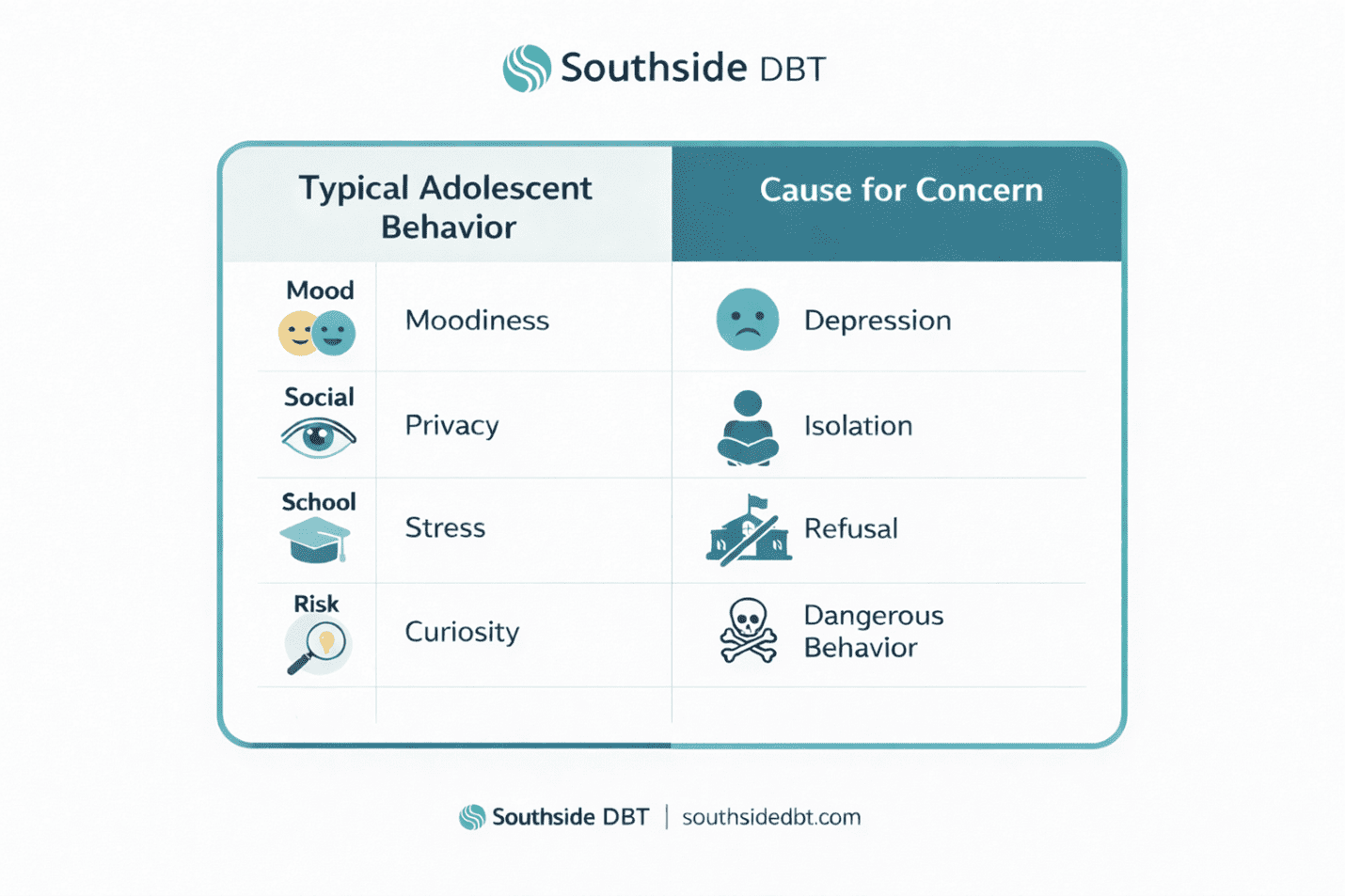
Typical Adolescent Behavior vs. Cause for Concern
It can be difficult for parents to know when a behavior is a normal part of growing up and when it requires professional intervention.
- Typical: Increased moodiness, desire for privacy, or stressful transitions to high school.
- Cause for Concern: Long-lasting painful moods, self-injury, suicidal thinking, or risky behaviors like substance abuse.
Practical Skills for Families
The manual emphasizes that parents and teens should learn these skills together to improve the household environment.
- Validation: Actively listening and reflecting your teen’s feelings back without judgment.
- DEAR MAN: A structured way for both parents and teens to ask for what they need or say no effectively while keeping the relationship intact.
Long-Term Growth at Southside DBT
Adolescent DBT is not about “fixing” a teen; it is about providing the entire family with a roadmap to navigate emotions together. By focusing on skills rather than conflicts, families can move from a state of crisis to a life of mutual respect and understanding.